Tour
Before installing anything, here is what SolidPing actually looks like.
Everything below is recorded from the real dashboard, not mocked up: the
video and screenshots are generated by driving the live UI with Playwright
(make showcase), so they get regenerated whenever the dashboard changes
instead of quietly going stale.
Creating an HTTP check
The canonical flow, end to end: the checks list → New check → pick the HTTP check type → fill in the target URL and a name → choose how often it runs and from which regions → save, and land on the check's detail page as the first results arrive.
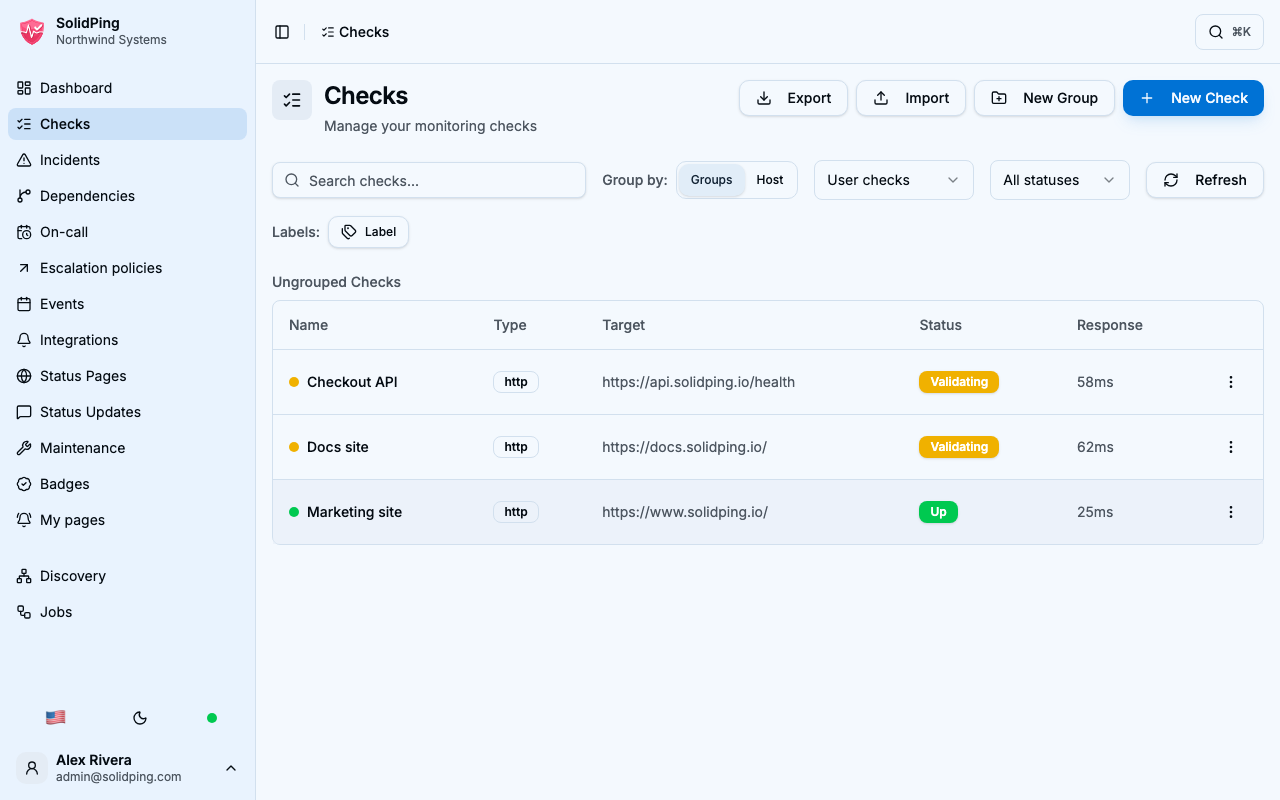
The checks list
Every check you monitor, with its current status at a glance. Checks can be grouped, filtered, and organised by host.
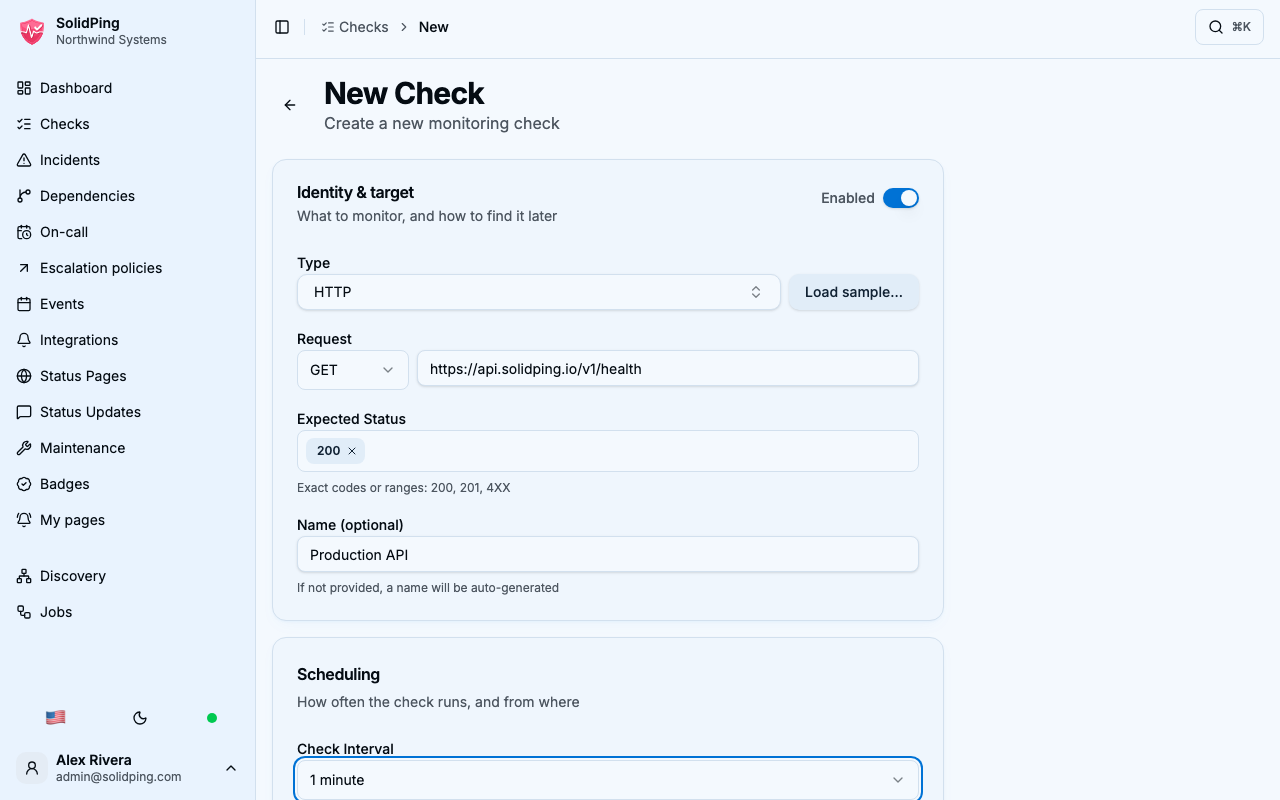
The new-check form
One form for every protocol. Pick the check type and the form reshapes itself around it — method, URL and expected status codes for HTTP, host and port for TCP, and so on. Scheduling (how often the check runs, and from which regions) sits just below, as the video above shows.
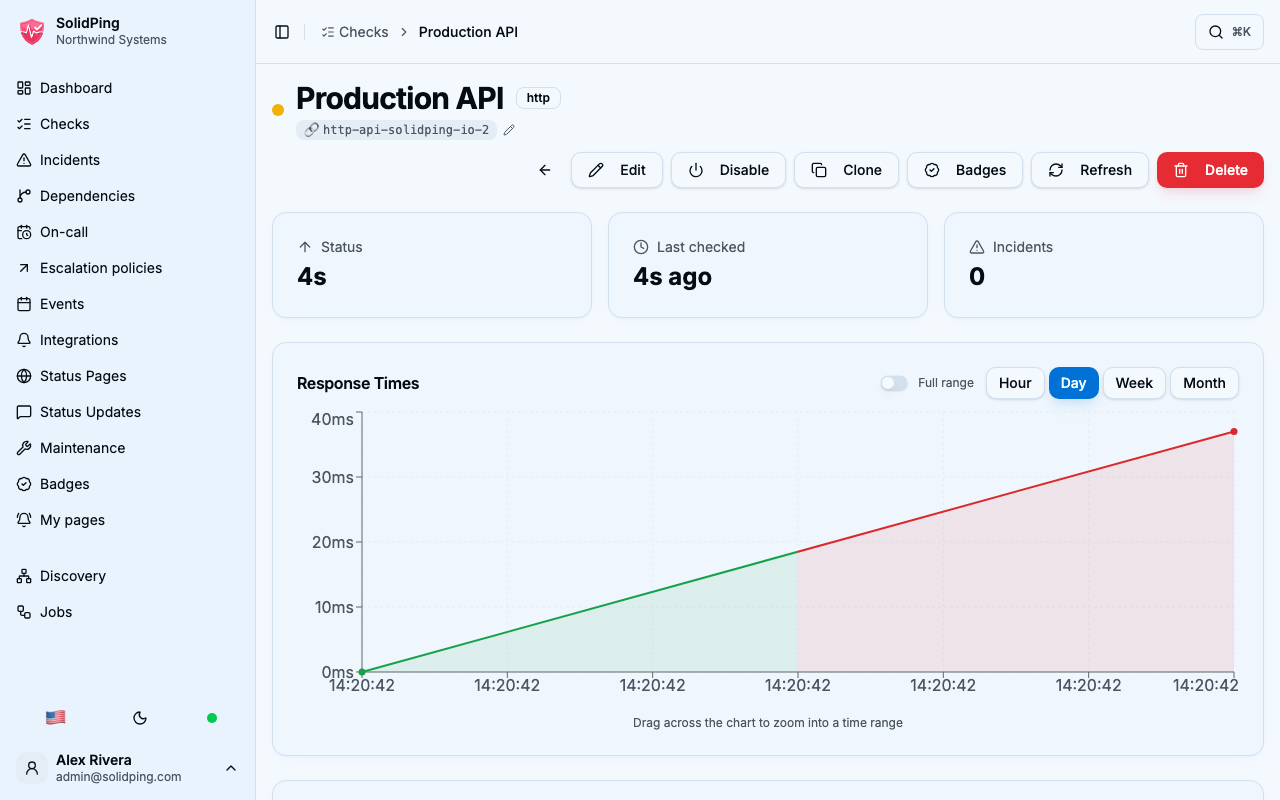
The check detail page
Once saved, the check starts running immediately. Its detail page shows the live status, response times over time (per region), and the raw result history.
Next steps
- Install SolidPing and create your first check
- Browse the check types SolidPing supports
- Read the configuration reference